How to Design Golf, Tennis and Padel Apparel (And Why It's Harder Than Ready-to-Wear)
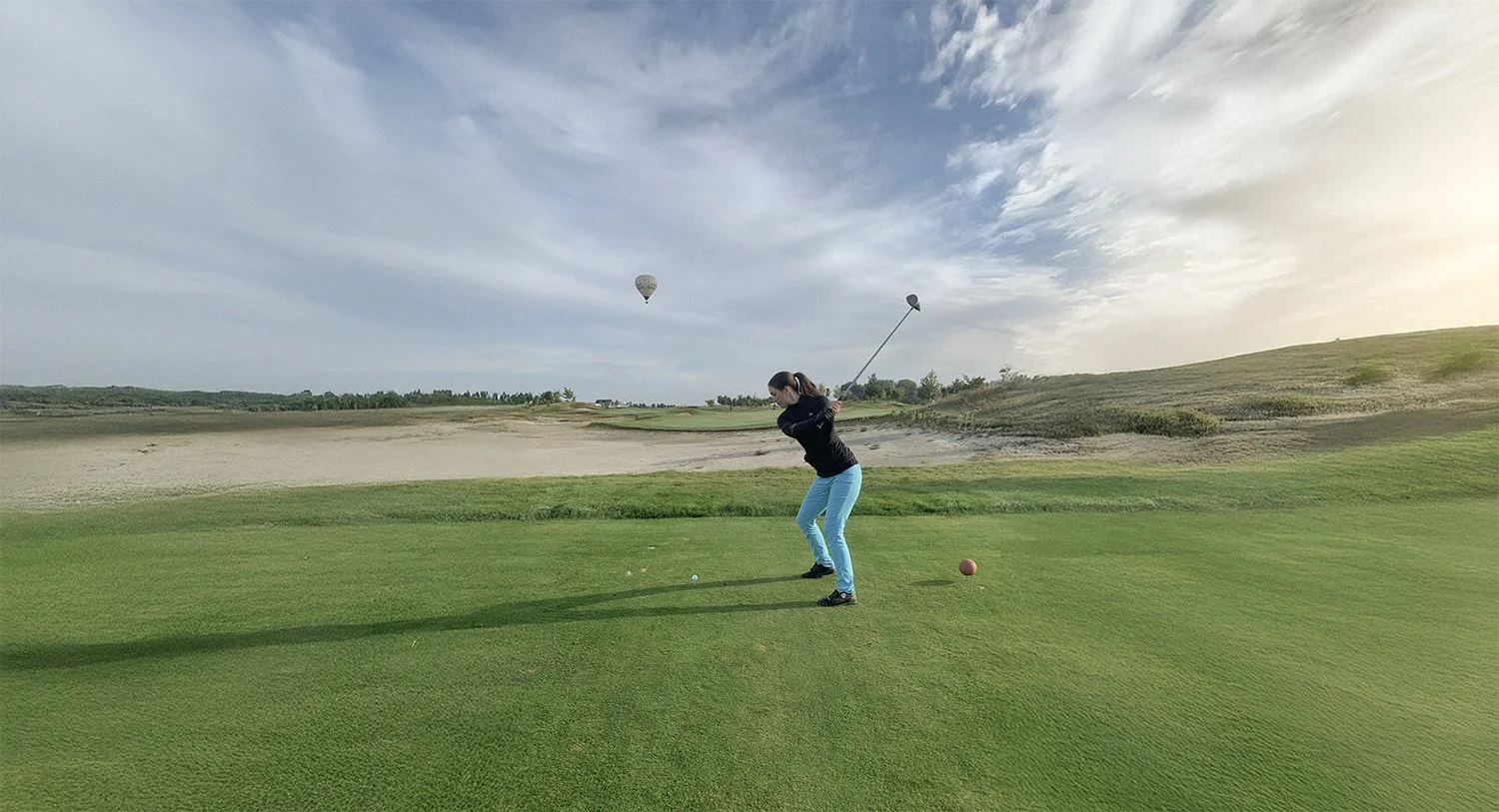
A fashion designer's guide to designing for golf, tennis and padel, from someone who plays them.
If you've searched how to start a sportswear brand, you've seen the same advice everywhere: find a technical fabric, add four-way stretch, pick a factory in Asia. What those articles skip is the part that actually decides whether your first sample works, which is that sportswear isn't ready-to-wear made from stretchier fabric. It's a different design discipline.
I came to golf first and never left it. I've since worked my way through most of the racket sports, and tennis and badminton are the two I keep returning to. That matters less as a credential than as a source of information, because there are faults you only find by wearing a garment for four hours in the sun, or by lunging for a shuttle and feeling a shoulder seam catch at exactly the wrong moment.
A growing share of the brands coming to me now sit in this space. Here's what I tell them.
Why This Category Is Growing So Fast
Padel is the clearest example. The 2026 Global Padel Report from Playtomic and PwC's Strategy& counts around 58,300 courts worldwide and roughly 19.4 million players, with nearly 7,900 new courts built in 2025 alone. The apparel market hasn't caught up, it's still mostly equipment brands extending sideways.
Golf has changed shape. According to the National Golf Foundation, on-course female golfers in the US rose 45% between 2020 and 2025, a net gain of 2.5 million people. That's not a trend, it's a demographic shift, and much of the category still designs as though it hadn't happened.
Tennis has crossed into fashion entirely. Pleated skirts, cable knits, court whites. Plenty of people now buy tennis-adjacent clothing without owning a racket.
For a new brand, the read is simple. Golf is mature but its women's segment has been underserved for decades. Padel is wide open and won't stay that way.
What Changes When Clothes Have to Move
Ready-to-wear is fitted to a body standing still. Sportswear is fitted to a body in motion, and everything downstream of that changes, including your block, your grade rules, your seam placement and your sample count.
Every sport has a primary movement axis, and it dictates the design:
Golf is rotation. A full swing takes roughly 90 degrees of shoulder turn against a much smaller hip turn. The garment has to absorb that twist across the back and lead shoulder.
Tennis and padel are overhead reach plus lateral movement. The serve takes the shoulder into full abduction, then the rest of the point is sideways, low and fast.
Badminton is the most extreme version of both. More overhead work than any other racket sport, and deeper lunges.
Design for the wrong axis and the garment fails in a way that looks perfectly fine on a hanger. A classic polo with a traditional set-in shoulder seam will bind at the top of a backswing, and you will never see that in a static fitting.

The Sustainable Performance Fabric Problem
This is the hardest part of the category and I'd rather be honest about it.
Performance apparel defaults to polyester and elastane, both petroleum-derived. Elastane is the bigger issue, because once it's knitted through a polyester base the blend can't realistically be separated at end of life. Recycled polyester helps the story but doesn't solve it, it's downcycling and it still sheds microfibres.
There are real alternatives worth specifying:
Sorona is a partly plant-based polymer with genuine stretch recovery, which lets you reduce or remove elastane in some constructions rather than offset it.
Amni Soul Eco is a biodegradable polyamide engineered to break down in landfill conditions far faster than conventional nylon.
Roica V550 is a degradable elastane with Cradle to Cradle certification, useful where you genuinely can't design the stretch out.
Merino and lyocell blends work beautifully for looser, lower-compression pieces. I've covered both in From Cotton to Cactus. Neither is a compression answer.
The lever most brands miss is mono-materiality. If your shell, thread, trims and labels are all one polymer family, the garment is recyclable. If the fabric is recycled polyester but the thread is nylon, it isn't. This costs nothing to specify at tech pack stage and is nearly impossible to fix afterwards.
My honest position: you can't currently make a fully biodegradable high-compression garment. You can make a very good 80% version and be transparent about the rest, which is a stronger brand story than an overstated claim.
Construction Details That Actually Matter
Rethink the shoulder. Raglan sleeves, dropped shoulders or a bi-stretch back panel all solve the binding problem. Which you choose is as much an aesthetic decision as a technical one.
Specify stretch as a number. Not "four-way stretch" but percentage stretch and percentage recovery, in both directions. Recovery is the one that matters and the one that gets skipped, and a fabric that stretches beautifully without returning gives you bagged knees by the fifth hole.
Choose seams for skin. Flatlock seams lie flat and cut chafe at high-friction points. Call out stitch classes explicitly rather than leaving construction to the factory's default.
Treat UPF as a spec, not a slogan. It's measurable and certifiable. If you're selling to golfers outdoors for four hours, test it and state it precisely, or don't claim it.
Design what the sport needs. A tee pocket. A glove loop. A skort with a silicone-gripped inner short so it doesn't ride during a swing.
Remember golf has a dress code. Collars, no denim, sometimes tucked shirts. It's the only sportswear category where the venue can turn your customer away, which is a constraint but also a genuinely interesting brief.
Where to Manufacture Sportswear
Activewear production is a different world from woven ready-to-wear. You need a circular knit or activewear specialist, not a general cut-and-sew factory.
The real barrier is fabric minimums, not garment minimums. Founders budget for garment MOQ and then get blindsided by performance knits carrying minimums of several hundred metres per colour. That single constraint kills more sportswear launches than anything else I see. The workaround is mill stock-service programmes, where you give up bespoke development and gain the ability to launch at all.
Asia is usually the strongest option here, because those factories work with a far wider range of technical fabrics than European ones and will go lower on MOQs than most founders expect, provided your specs are precise. Portugal and Turkey are viable for simpler pieces. I've written more on vetting factories in How to Find a Clothing Manufacturer, and on launching small in Small Batch Manufacturing in Fashion.
Before You Sample
Budget for three sample rounds, not two. Fit faults in sportswear only appear in motion and you won't catch them in round one. Price it in from the start, alongside everything else in what it actually costs to launch.
Then wear-test properly. Not a fitting, an actual round or two hours on court, sweating. Every real fault I've caught in a sportswear sample, I caught this way: a waistband that rolls only at the top of a swing, a collar that starts rubbing at the fourth hole, a sleeve that binds only at full extension.
And get the tech pack right first. Stretch percentages, recovery percentages, elastic tension ratios, seam classes. Vague specs produce vague samples, which is the most common reason samples come back wrong.
Final Thoughts
What I like about designing for this category is that the feedback is immediate and honest. Either the garment moves with you or it doesn't, and you find out within the hour. There's no styling your way around a seam that binds.
That's also why it rewards founders who take the technical side seriously. The brands doing well here aren't the ones with the best moodboard, they're the ones who got the fabric spec and the fit right and then made it beautiful.
Developing a golf, tennis or padel collection? I work with brands from first sketches through fabric sourcing to production-ready tech packs, with factories matched to technical fabrics and realistic MOQs. Book a consulting session→