Can AI Write Your Tech Pack? What It Gets Right and What Factories Reject
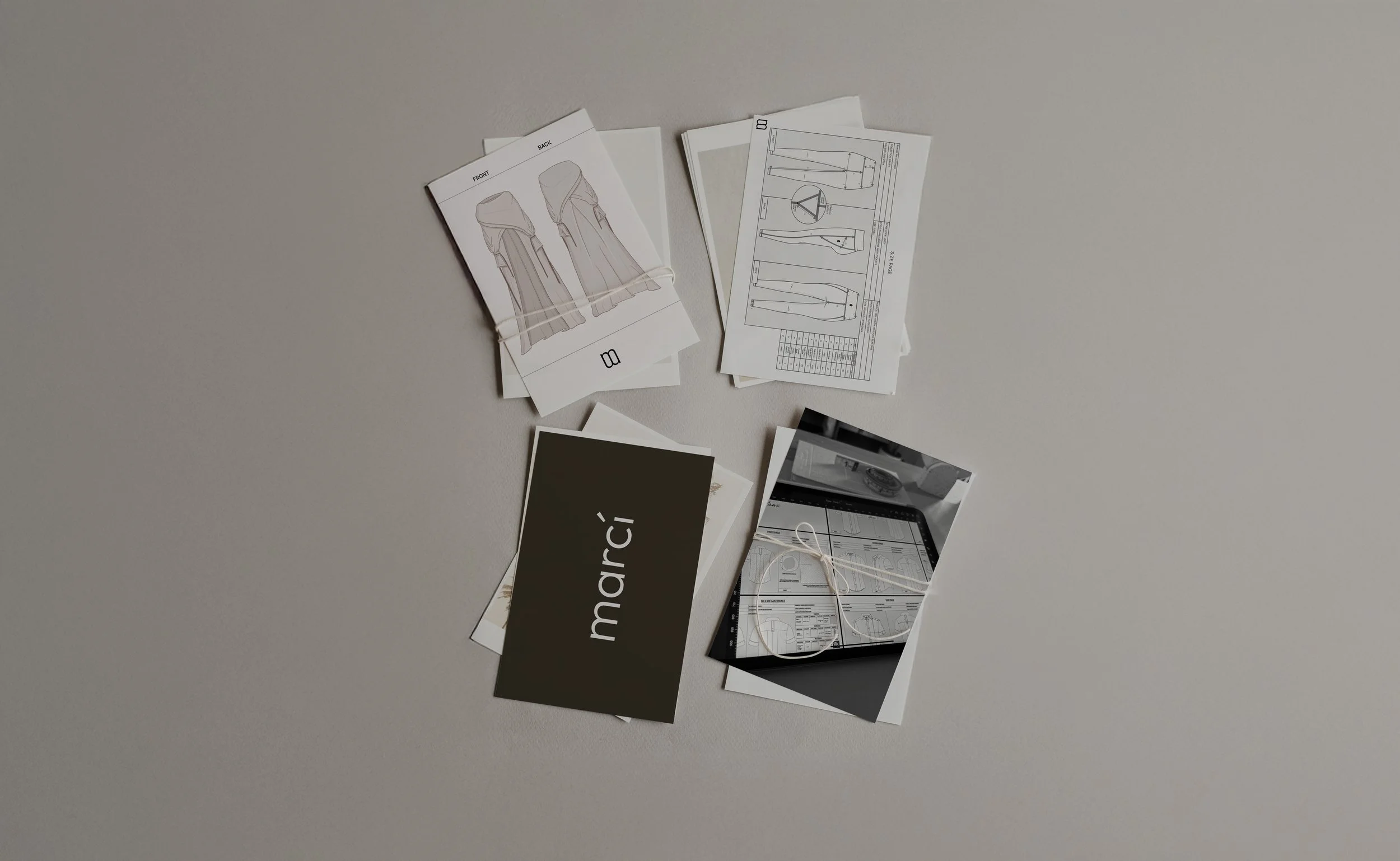
A fashion designer's honest look at AI tech pack tools, and where they stop being useful.
If you've searched AI tech pack generator recently, you've seen the pitch: upload a sketch, answer a few prompts, get a factory-ready tech pack in under ten minutes. Some of that is genuinely true, and the tools are better than most designers like to admit.
The word doing the heavy lifting is factory-ready.
The question isn't whether AI can produce a tech pack. It clearly can. The question is whether the document contains decisions, and that turns out to be a very different thing. Here's where I've found the line falls, based on the packs I send to factories through the studio every week.
Which Tools Are We Actually Talking About?
They fall into three groups, and founders routinely reach for the wrong one.
Tech pack platforms.Techpacker and Backbone handle structure, version control and factory sharing. Closest to what most new brands actually need.
3D garment tools. CLO 3D, Browzwear VStitcher and Style3D simulate fit and drape, and now include AI-assisted pattern drafting and grading. Powerful, steep learning curve, and priced for teams rather than first collections.
Generative design tools. Refabric, NewArc and similar produce concepts and flats from a prompt. Fast for ideation, furthest from anything a factory can cut from.
The digital case is real, incidentally. McKinsey's State of Fashion Technology reporting has found meaningful sampling reductions among brands investing in digital product creation. The gains are genuine. They just arrive at the point where the digital file is grounded in real garment data, not before it.

What AI Genuinely Does Well
Structure.
It never forgets a section. Cover page, flats, bill of materials, construction, size page, colourways. For a founder who doesn't yet know what sections exist, that alone earns the subscription.
Terminology.
You describe a puffed sleeve head, it returns "gathered sleeve cap". The vocabulary gap causes a lot of friction between founders and factories, and this closes a good part of it.
A starting point for flats.
Rarely usable as-is, but cleaning up a generated flat is quicker than drawing from nothing.
Consistency.
Twelve styles with identical callout language and formatting. Hand-built packs drift over a range, generated ones don't.
Where It Breaks
Measurements that aren't grounded in a pattern.
AI produces measurement tables that look completely plausible. Plausible isn't correct. Those numbers need to come from a block or a fit sample, and this is the most expensive failure because it only surfaces at first sample.
Generic grade rules.
Grading increments are specific to the garment and the customer. Software defaults give you a size 16 that fits nobody.
Callouts that don't match the machinery.
A flatlock specified on a woven, or a coverstitch at a factory that doesn't own one. The tool has no idea what's on your factory's floor. Matching product to factory capability is half the work, which I covered in How to Find a Clothing Manufacturer.
Fabrics that aren't fabrics.
"Recycled polyester jersey, 220gsm" is a description. A specification is a mill, an article number, a colour reference, a width, an MOQ and a lead time. AI can describe, it can't source, which is why fabric sourcing sits alongside design in everything I do. From Cotton to Cactus is the better place to start on fibre choices.
Vague trims.
Generated packs say "invisible zip". A factory needs brand, type, length, colour code and puller. Every ambiguity becomes an email or a wrong sample.
Missing tolerances.
Every measurement needs a plus/minus range. Without one you have no grounds to reject a bulk delivery.
Renders pretending to be flats.
A shaded render isn't a technical drawing. Factories need line art, front and back, with stitch lines visible. You can see the difference in the packs and flats in my portfolio - renders often contain seams that couldn't physically exist.
The Risk Isn't a Bad Tech Pack
It's a bad tech pack that looks good.
A visibly incomplete pack gets questioned, and someone emails before anything is cut. A polished, confident, quietly wrong one gets made.
That's what has really changed. AI hasn't made tech packs better or worse, it has removed the signals that used to tell a factory when to check. I wrote about what that costs in It Wasn't the Factory's Fault, and it's become more common since these tools arrived.
How to Use Them Properly
Treat AI as a formatting layer rather than a decision layer. Format is perhaps a third of a tech pack's value, the rest is judgement grounded in a real pattern, a real fabric and a real factory.
Generate the structure, then fill it yourself. Let the tool build the skeleton, replace every number with one that came from somewhere real.
Never send a generated measurement table. Take the points of measure from your pattern or fit sample. If you have neither yet, you aren't at tech pack stage.
Redraw the flats. Trace over the generated version if it helps, but send line art you control.
Have someone technical read it once. An hour of review is far cheaper than the sample round it saves, as the numbers in what it costs to start a fashion brand make clear.
Before You Send It
Do the measurements come from a real pattern or fit sample?
Does every measurement carry a tolerance?
Are the grade rules yours, or the software's defaults?
Does every fabric have a mill, article number, colour, weight and MOQ?
Does every trim have a supplier and full spec?
Do the callouts match machinery your factory actually has?
Are the flats line drawings, front and back, with stitch lines?
Has a person read it as though they were the factory?
If you can't answer all eight, it isn't ready, however professional it looks.
Common Questions
Can AI create a tech pack?
Yes, and the structure is usually sound. What it can't do is generate measurements from a real pattern, source a specific fabric, or know what machinery your factory owns. It builds the container, not the contents.
Do factories accept AI-generated tech packs?
Factories don't care which tool made the document. They care whether the specifications are complete and unambiguous. A generated pack that has been properly filled in is fine. One sent as-is usually isn't.
Can ChatGPT write a tech pack?
It can draft the written specifications and a sensible section structure, and it's genuinely useful for terminology. It can't produce technical flats, accurate points of measure, or graded size charts, which are the parts a factory actually works from.
Is a tech pack template enough to get started?
A template gives you the sections, which is a real head start. It won't tell you what belongs in them for your garment. Templates and AI tools solve the same third of the problem.
How much does a professional tech pack cost?
It varies with garment complexity and how much development is still needed, and it's usually quoted per style. The more useful comparison is against a wasted sample round, which costs considerably more once you include fabric, shipping and the weeks lost.
Final Thoughts
I use these tools, and they've taken real repetitive work out of my week. I'd much rather a founder arrive with a generated pack than with a moodboard and a hope.
But the value in a tech pack was never the document. It's the decisions inside it, and why each one was made. AI is very good at building the container, and it won't tell you when it's guessing at the contents. That judgement is the part I've spent years building, and a little of why I work the way I do sits behind every pack I write.
If you're not sure which parts of yours are decisions and which are defaults, that's a normal place to be, and it's worth an hour of someone's time before it becomes a sample.
Want your tech pack reviewed before it goes to the factory? I write and review packs for brands producing across Portugal, Asia, and beyond, and a review round costs a fraction of a wasted sample. Book a consulting session or get in touch →